The White Throated Sparrow


In honor of Spring, when the white-throated sparrows stop in our yard on the way to the White Mountains and other points northward, I'm rerunning the following essay, first published on Hackwriters, Feb 1st 2006.
__________________________________________________________________________________


On a miserable hiking trip in New Hampshire’s White Mountains, a friend and I were followed and encouraged by a particular birdsong, simple and consistent, loud and joyous. We may have forsaken that grueling June march if not for those bright, invisible voices. But the name of the feathered animal that had cheered us on our way remained dark. 


 The mystery nagged my imagination, appearing whenever I heard the Spring music of the forests. I dabbled with taped bird-songs from my local library and listened for the melody during my many wood-walks. Nothing for four years. On another trip to the valleys of the White Mountains in a cold May, I strained my ears for the song, but snow and rain may have kept the enigmatic creature away. I didn’t know.

And then, an opportunity to solve this little problem presented itself. My friends and I took another hike across the peaks of the Whites, from hut to hut along the high trails. As we passed through the krumholz layer of stubby pines, the song burst from the thickets. Enchanted and determined, I strove with my limited musical ability to memorize the song. At Madison Hut, I confronted the local naturalist, a college girl ten years younger, hoping that she knew something I didn’t. "What is this bird?" And I vainly tried to whistle the song. "Well," she shrugged, "It’s probably the white-throated sparrow. You hear it a lot up here. The song goes…old sa-am peabody peabody peabody."
 

"That’s it," I smiled with the joy of a four-year mystery solved.
 

"It’s actually the only birdsong I know," she confessed, and we laughed at our luck.

I learned as much as I could about this tiny little songster, a gray-breasted bird with a white throat, a black bill, and a yellow spot between its eye and bill. Its summer range is from Canada to the northeast United States and its winter range is from the southern U.S. to Mexico. I found that some of these magic birds wintered in my own home in Connecticut, but at that time they do not sing. I vowed to try to listen for them with more than my ears.

Only a week later, on the top of the more easily reached Mount Greylock in Massachusetts, as I relaxed on a rock perched high above the town of Adams, the little mountain birds took up their fabulous hymn, conversing back and forth in the pines. I realized that I would carry in my heart the twelve notes of the white-throated sparrow for the rest of my life. And more importantly, perhaps, I would carry the vital satisfaction of seeking and finding one of those inconsequential scraps of knowledge that nevertheless imbue our daily lives with spirit.

Russell Holmberg is Young Farmer of the Year


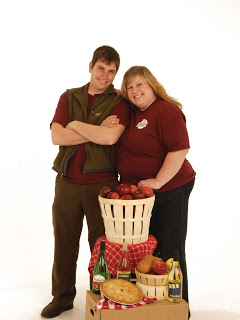
Russell Holmberg (pictured here with his sister Amy) is Connecticut's Young Farmer of the Year. We first met Russell while writing the History of Connecticut Wine. Of course, Holmberg is featured in the Insiders Guide. And Amy contributed a recipe to our next book on the History of Connecticut Food. So I was quite pleased (though not surprised) that he was given this award by Governor Malloy. Congratulations!

Junior College of Connecticut 1929


Pictured is the class of 1929 of the Junior College of Connecticut, the first such "college for the masses" in New England. Though there were simialr colleges out in the midwest, when E. Everett Cortright brought this idea to Bridgeport in the 1920s it was a little crazy. But it was supported by the president of Harvard, who bemoaned the level of writing and math (sound familiar) of freshmen students at the time. This was a way to prep unprepared students to go on to larger universities.

Of course, the Junior College became its own university, the University of Bridgeport, and with the institution of the G.I. Bill, did very well. But that is another story!

Kobe Beef Hot Dog at Mikro


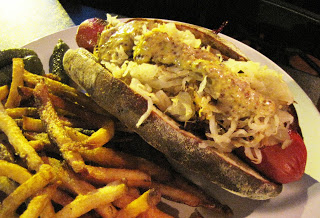
The Kobe beef craze has gone a little far, I thought, when I saw this hot dog on the menu at Mikro in Hamden. I mean, sure Kobe beef is beautifully marbled and Kobe steaks taste admittedly better than other beef (except Wagyu - oh, the Wagyu I had at Nobu one spring evening...). However, doesn't putting said beef in a hot dog completely wreck the marbling effect, and render the quality of the beef useless?

Apparently not. The hot dog was excellent, though the red relish, sauerkraut, spicy mustard, and brioche bun might have also had something to do with it. The next day I tried a quality all-beef hot dog from the store, and there was no comparison. Sometimes quality is paid for, and the marketing truisms hold actually true.

I was glad to be wrong.

The Forgotten Joy of Sauternes


Sauternes is my favorite sweet wine, hands down. From "The Forgotten Joy of Sauternes" by Amy Nawrocki-

"When it comes to dessert wines in America today, we often go for port or sherry, familiar endings for our great meals. And there’s nothing wrong with these choices; I particularly like an aged tawny port. But I’d like to offer another suggestion, one sometimes overlooked, perhaps forgotten: Sauternes. Connecticut’s own Mark Twain was a fan of this sweet digestif. Ever the epicure, Twain was, as usual, on to something..."

Read the rest of my wife's article over at Connecticut Food and Wine.

Goodbye to Woody


Looks like we've sold our condo, and can finally rest in our new home comfortably. I will miss the generations of woodchucks who lived at the complex, though. Here's a photo of Son of Woody, the second generation. We've traded him in for deer at the new house. Sorry little buddy!

The Beavers Down the Street


Amy and I were out walking the other day, and we saw this fresh beaver activity not three miles from our house. They raised the water level about 6 inches with three small dams like this. Below is their lodge, with a couple neighbors.


Here is a small tree they chewed down, although mostly their dams seemed to be fallen branches. I guess the recent hurricanes and snowstorms have given them material.


I hesitate to say where I saw these wonderful beaver dams and chews. I know there are some who aren't fans, and might kill them because of their destructive activity, especially here in the suburbs. But when spring comes, everyone will see them and no doubt someone will report our furry rodent  friends. It won't be me, though. For now, I will enjoy the knowledge that these once omnipresent Connecticut residents are back, even right down the street in the most populated areas of the state.

Tattie Scones and Baked Beans


Bringing a little of old England to New England with homemade tattie scones and warmed up Heinz baked breakfast beans. I guess tattie scones are more Scottish than English, of course, but the full English breakfast is a little heavy unless I'm hiking the Cumbrian orGrampian mountains that day.

My wife, Amy Nawrocki, who has become an even better cook after our year of research for A History of Connecticut Food, whipped the scones up this weekend, along with pork cake and a delicious shakshuka (recipe in the latest Yankee Magazine).

Interviewed by Bill Ectric

Recently I was interviewed by counter-cultural writer and gadfly Bill Ectric at his blog. It went a little like this:

Bill: Are you originally from Connecticut?

Eric Lehman: I moved to Connecticut fifteen years ago, and to Hamden, Connecticut thirteen years ago. Just this year it became the place I’ve lived longest. I think, like many Americans, I felt like a nomad, constantly on the move from town to town, state to state. That gives a wonderful sense of freedom, but it also means we care less about each place we live in, and each place we visit.
I first began travel writing as a memoirist, trying to get a hold of my past, which mostly involved cataloging each place I had traveled to, and what each meant to me. I quickly became a more professional travel writer, though I still focused on the personal experience of travel. When I moved to Connecticut, it became the place I traveled in the most, (obviously). I treated it as such, writing about it, learning its history and customs, and delving into it as a place in a way I had never done with any other place. Now, as a travel and history writer, I am even more concerned with the dialectic between freedom and home. I have come to believe a sense of home is necessary, and when we do move around the like the modern gypsies we are, we should learn everything we can about the new place we encounter. Doing that helped me move away from purely personal experience, and become invested in the human race.

Bill: Thomas Wolfe said, “You Can’t Go Home Again.” Hemingway said, “Paris is a moveable feast.” Do you think one’s home can be moveable?

Eric: Well, I think Wolfe’s definition of “home” is wrapped up entirely in the past. He’s right – you can’t go home again, if home is a fixed and immutable idea that you have in your mind. Maybe Hemingway means “a moveable feast” is an idea that you carry around with you, but I prefer to think of his quote as meaning that Paris (or whatever other place means something dear to you) changes you, and informs your life in a way not often realized, something we feast on for the rest of our lives, bite by bite. No matter where we are, we can enjoy that feast. In this way, Hemingway’s quote also looks to the past, but does not want to “go” there. Rather, the past becomes the bread that sustains our future.

Read the rest of the article and other interviews here.

Buffalo Wings at Connecticut Food and Wine

My first article on the excellent website Connecticut Food and Wine is up. It is called Buffalo, Connecticut, and focuses on the wonderful buffalo wings that tempt me to this day.

"Buffalo wings are a response to an age-old problem: what to do with the thin end of a chicken’s long arm? Well, drown it in spicy sauce, dip it in blue cheese, and make it a meal. And though we know they are mostly grease and fat, we Americans have taken a shine to them, chewing the hot flesh off the tiny bones, nibbling the last gobbets of tissue..."

Read more.

On Expectations and Friendship

I expect too much from people. I expect one friend to be more open-minded, I expect my high-school girlfriend not to settle for an ordinary life, and I expect my best friend to become more productive, to be stronger and more assertive, to make the necessary sacrifices for his success. I am not exempt from this anticipation. But I am continually disappointed by everyone around me, most of all myself.

My own perceived failures are a subject for another day. But why do others continually disappoint us? Must we continually compromise in our hopes? I have had many close friends in this lifetime, and one by one they failed my hopes for them: geniuses flattened by the conventions of society, actors transformed into salesmen, writers stymied by hang-ups, smart people settling into to ordinary lives. That has always been something to transcend for me. In his mid-twenties, my best friend seemed to be satisfied with his ordinary life. But I saw in him the potential to become a great writer, hidden under insecurities and bad habit.

This filled me with frustration and I kept trying to hand him magic keys, to hit him with a Zen stick like the monks do when one falls asleep. "I don’t want or need your Zen stick.," he told me once. So, why did I continue to push him? Why did I find it necessary for my friend to become this supposed best self? Was it my own weakness that I was talking to? I can’t say, but it could have destroyed our friendship.


Finally, I did give him a key, the book Iron John by Robert Bly, and it changed his life. He is not only artistically productive now, he has taken charge of his existence and values in a way that exceeds mine. I can pat myself on the back and tell my ego that I had something to do with his apotheosis. But no doubt this sort of thinking only feeds my imaginary quest, especially since this rare success is the only one in my entire life that I can hesitantly point to. In every other case, my friends most likely sensed my disappointment and withdrew. I can definitively point to three or four cases of that process and they are not pleasant to examine. What was I doing wrong? I merely saw their magnificent potential and wanted them to develop it.

There are two things wrong with this attitude, which I share with any number of people, especially parents who expect too much from their children. First, one cannot be both friend and teacher without risking that friendship. Parents have a step up here, because their job for the first two decades or so is indeed as a mentor. But if they want to keep a relationship with their children after adulthood, then this point is something to keep in mind. Friendship is its own mode, and although no friendship is ever completely equal, trying to "fix" people’s faults is a sure way to tip the seesaw until someone falls off. And if we do give people magic keys, we must turn away and not suppose them to find the lock.

Second, people will always disappoint us if we harbor our own expectations for them. This amounts to having fantasies about other people’s lives, which they can never properly fulfill. Their shortcomings are in our projected, perfect image of them, not in their real self. Does this mean that we should accept whatever vices and horrors that our friends perpetrate? No, of course not. We must stop them from self-destruction and from hurting others or we are not being true friends. But being a true friend also means acceptance. Let’s say that in our projections we are actually correct about our friends’ failures and weaknesses. Accepting these weaknesses, both real and imagined, is the first step in acknowledging that they are human, not perfect beings of unlimited potential.

In that perfect, fantasy world, my friends won’t fail, I won’t fail, and we will stand at the top of a mountain as old comrades, with no dream left unrealized. But I cannot push them to achieve that if I want them to remain my companions. I must have no expectations, must live my own life to its potential and let them live theirs in whatever way they choose. And then, instead of trying to be the key-giver, I will be a friend, with no expectation except for the maintenance of our frail, too-human connections.


First published at Hackwriters.

Red Flannel Hash

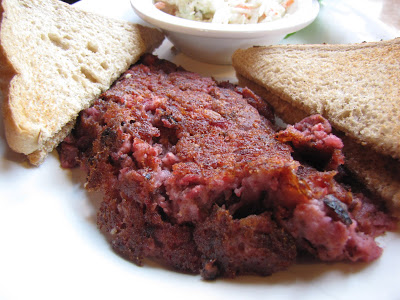
I'll be writing more about red flannel hash in the upcoming History of Connecticut Food, and including a fine recipe. However, this dish from Pat's Kountry Kitchen in Old Saybrook is a particularly good example of this New England tradition. The secret? Beets, which along with the corned beef give this hash its beautiful red color. If you've never tried it, you'll be pleased by its taste, and even more pleased by its amazing appearance. Truly, a Connecticut classic.

Chatfield Hollow

I've never taken a swim at Chatfield Hollow. There was a scare a couple years ago about the lake, but even so, I'm not a huge fan of lake swimming in general. However, Chatfield Hollow State Park is certainly one of the finest places for a rambling hike, with its "Indian Caves" (see video below) and jumble of ridges and swamps. Take a winter walk there, and you'll be surprised at the silence. And don't miss the blue trail that heads off to the south across the road, which leads to yet another cave, and even more solitary joy.