Stratford Public Library


I had a great time giving a presentation to about 25 people at the Stratford Public Library this past Sunday. Some old friends, like J.F. from WPKN, showed up, as well as some new ones, like Diane and Eric. It was a pleasure to talk to Charles Lautier from the library, as well. Next up, the Green Market Exposition on October 21. Of course, I have to run the 24 hour readathon on Oct 16-17 first - no rest for the published.

Trumbull Public Library


Last weekend (or was it the weekend before?) I gave a presentation at the Trumbull Public Library. I even had some people show up for the second time - I hope they weren't bored. They spelled my name wrong on the sign out front, but otherwise they did a fantastic job of giving me everything I needed.


In the last picture I'm talking beforehand with a woman who was 91 years old and remembered watching the animals from the circus' winter quarters roam around the city. Unbelievable! I offered to let her give the lecture. You can also see that they have a videocamera there - I was being filmed for the local TV station, Channel 17. I can't wait to see it!

City Lights and the Locomobile


Last weekend I gave a presentation about Locomobile at the City Lights Gallery for the Antique Car Show. It went so well that I panicked I wouldn't have enough books the next day at the Trumbull Library. Luckily, Trumbull was ahead of the game, and had their own books purchased.

The picture below is actually of a "Trumbull" car, so maybe that means something.


In 1899 the Locomobile began as a steam-powered car. With inventor and electric car manufacturer Andrew Riker’s development of a new gasoline-powered engine for the company, Locomobile was soon one of the most popular cars in the world. The “Number 16” car pictured below won the 1908 Vanderbilt Cup, clocking in at an astonishing 64.38 mph. Locomobile was called the “best built car in America.”

The Bridgeport, CT factory stood on the west side of the harbor, where oil drums stand today. As pictured in the postcard to the right, the factory lay in sight of the famous Seaside Park, and Locomobile cars were often taken for fast drives on gravel pathways that had been designed for stately horse drawn carriages.


The Locomobile had the distinction of being the first car not designed to look like a ‘horse and buggy.’ Andrew Carnegie and Charlie Chaplin took pride in owning one. During World War I, the company sold the Riker Truck to the British army, contributing more vehicles to the war than any other American company.

The brand became a watchword for quality automobiles, catering toward a luxury market. Tiffany and Company even supplied the cars’ silver fittings. However, with the increasing use of autos by the general populace, and the cheap, accessible cars now produced by Ford Motor Company and GM, Locomobile began to lose importance and customers. The Great Depression sounded the final death knell for this fabled Bridgeport car company.

24 Hour Readathon

We still have a couple of weeks before the 24 Hour Readathon here at the University of Bridgeport. There's an article on the UB home page today.


This photo is actually me reading at the International Poetry reading a couple years ago. I don't have any readathon pictures yet, because we've never done it before! This is an exciting new opportunity, and heralds a new age in UB's outreach to the community. The readathon will be held in the Student Center Social Room, which has hosted speakers like Malcolm X and bands like Duke Ellington's. Should be a blast.

Ken Burns, Jazz, and the Beat Poets


Dear Mr. Burns:

In preparation for your upcoming documentary on America’s National Parks, my wife and I have been reviewing your excellent series on Jazz. In part 10, which focuses on Charlie Parker, I noticed a dismissive attitude in both the narration and commentary toward Allen Ginsberg and the so-called “beat” movement. This is due to Ginsberg’s statements about the spontaneity of be-bop, when of course it is quite obvious to a practiced listener that be-bop requires incredible technical proficiency.

It is certainly possible that Ginsberg and his friends heard in be-bop what they wanted to hear. Don’t we all! But if so, it is a historical irony that “beat” poetry is also called “spontaneous” and lauded for it, when in fact the best of it, especially Ginsberg’s poems, also use very complex, syncopated rhythms, and require a similar technical skill to great jazz.

Perhaps it is possible that Ginsberg is referring to the spontaneous spirit of jazz, something that the documentary itself focuses on when comparing the strict “swing” music with, say, Count Basie’s version. It seems an oversight not to explore that angle more, rather than dismissing the author along with a generation of young be-bop listeners. Of course, I would love to see that oversight remedied in a documentary on the history of American Literature!

It is a rare false note in an otherwise spectacular documentary on the history of Jazz. Keep up the good work as America’s greatest documentarian and thank you for your time.

Sincerely,


Eric D. Lehman
English Department
University of Bridgeport

White Leaf Press Anthology


My wife is in the new White Leaf Press anthology of poets from Britain and America. You can find her work in Issue 5. The poem is called "Some Things are Best Left." Here's what editor Stephen Brown said of the piece:

"The ghost that walks through Amy Nawrocki’s poem is the memory of a failed relationship, presented as an unfinished painting: ‘two figures in the half green / landscape of the canvas.’ The two ghostly figures in the poem are indistinct, ‘a blank space emerges.’ Amy suggests that ‘the colours are trying to shade in what is really blank.’

When the speaker urges in the last stanza to ‘Look over and finish the scene,’ one wonders whether it is addressed to the reader or the lover, but the intimacy is lacking in the end and the white space suggests coldness, the emptiness that remains. But as Amy says, ‘Even after it is over, or when we move on, the brush strokes are still there, however subtly.’"

Back to Pennsylvania


I grew up in the Keystone State, and it was good to be back to visit our friends Ryan and Jenifer, along with our 'godson' Hawk. We had a great time at the Wharton Esherick museum and just hanging out with the one-year-old wonder. This is "Shearer Elegance" - the amazing bed and breakfast in Linfield, where we stayed.


We ended up splurging and buying an actual print made from a wood block carved by Wharton Esherick for a plate illustrating Walt Whitman's "Song of the Broad-Axe." It now graces our foyer and reminds me to work hard as I'm leaving the house, or entering it. Work is a pleasure that is unknown by the young, who often think it unpleasant. I know I did, but now revel in the opportunity to create and teach.

On Monday the fall semester begins, and it's back to some of that serious work. I'm deep into writing the history of Hamden, but this fall I will have plenty of chances to talk about Bridgeport on my fall tour. You'll be hearing more on that soon...

Prince Edward Island

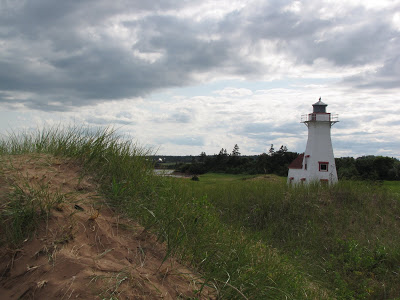
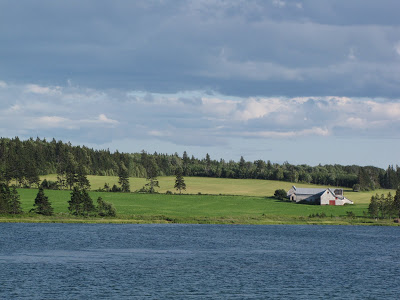
This island now has to be one of my favorite livable areas of North America (I like the wilderness out west a lot, but wouldn't necessarily want to LIVE at the bottom of the Grand Canyon, etc.). It reminded me a lot of Europe, except the houses were not as old. The red sandstone really contrasts with the green fields, purple sea, and blue sky. We stayed for the most part in the 'touristy' part of the island - and it was barely touched.


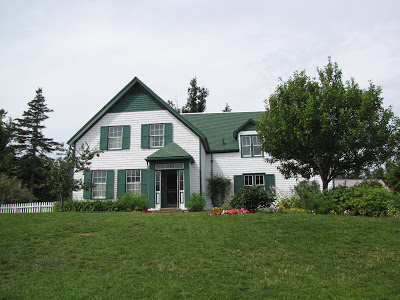
This last one is the famous Green Gables, home of the fictional heroine "Anne of Green Gables," in reality the home of the author's (Lucy Maud Montgomery's) cousins.

Nova Scotia

I have recently returned from a journey to the Canadian Maritimes, and found much to love there. Here are some photos from the Nova Scotia section of the journey...


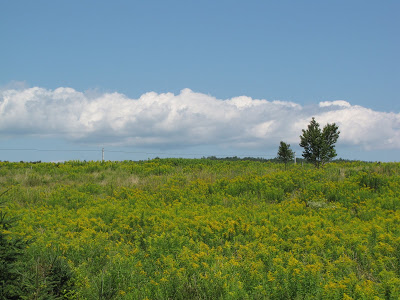
Fields of wildflowers!


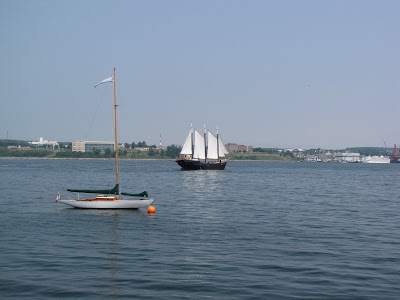
Halifax...


The ubiquitous fireweed, my favorite 'weed' of all.


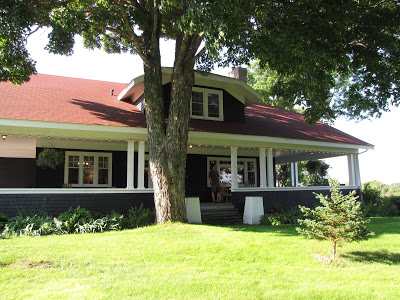
And the Falcourt Inn, with a porch one could sit a lifetime on.

Campsite at the Edge of the Real

Camping had always been a means to an end for me, a way to get close enough to the wild to facilitate sightseeing and hiking, a way to escape the secular reality of everyday. But that all changed the day Ryan, Jenifer, and I set our tent at the northern tip of Cape Breton Island.
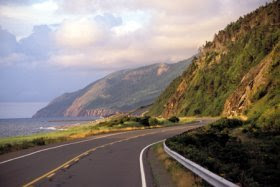


Our first night on the peninsula had been a disaster, a tremendous summer storm forcing us out of the woods, only to find that every single motel along the Trans-Canada Highway had been booked solid. Finally, we had spent a short and miserable night in the last available room in the province. The next morning we drove over the causeway and into a different world.

The island seemed untouched by the twentieth century. Victorian houses and pastured farms gave way to tiny fishing villages and log cabins. The three of us twisted along the Cabot Trail, over the boggy plateau and back down to the coast. We turned off on a gravel road and stopped at an isolated Buddhist monastery for a spiritual interlude, communing with the blustery offshore wind and carefully tended garden paths. And then we turned back into the highlands, stopping suddenly as a black bear cub crossed the mountain road. The mother bear hesitated by the guard rail, peering at us. We stopped a car behind us, but travelers kept whizzing by in the other direction, preventing the bear from joining her offspring. Finally, giving up, we continued on, staring into the huge animal’s eyes as we passed a few feet away. We had entered another realm, but instead of the feel of magic, of unreality, this land seemed more natural and tangible than the one we had left behind.

Near the tip of the hand-shaped island, we turned off the Cabot Trail onto a dirt road, bouncing onto a long verdant finger of rock. Bays hemmed us in from both sides as we crawled farther into the boreal hinterland. At last, we found a place to camp, parking by a pine forest on the edge of a long grassy sward that dove down towards the crashing sea. Across the bay to the west, a long forested ridge jutted out into the North Atlantic, pointing towards the unseen crag of Newfoundland. The waves rumbled and echoed far below, giving the impression that all islands give, of being on the very edge of the blue-green globe.

Jenifer carefully set up the tent and prepared our beds, while Ryan and I cooked a lavish dinner under a covey of circling hawks. The sun began to set over the western ridge as we filled our bodies with yellow squash soup, red spicy pasta, and chocolate pudding. As dusk settled over the empty land, I wandered out into the meadow, which ended in a row of stumpy pine trees at the top of a rocky cliff. The tide had gone out and long silver strands of beach nudged into the bay. I strained my vision, trying to spot seabirds far below. Instead, two pairs of gleaming eyes jolted into mine from only twenty feet away. Two large red foxes, looking as if they were half-coyote, stared at me curiously. I smiled and backed up, making my way back to the green dome of the tent, where Ryan and Jenifer were preparing for bed. "Foxes!" I grinned, pointing. And then there were more, flitting along the edges of the meadow, darting in and out of the pines. I had thought foxes to be solitary animals; these were clearly not. But all I could think of was how right this was, how much more natural their community seemed. Perhaps, like us, the solitary foxes of my New England home were driven to that state by our crowded city-world.


After we had settled in for the night, I exited the tent to eliminate some of the lime tea I had enjoyed earlier. The lush meadow was brilliantly lit and I looked up, expecting to find a full moon. But the night was moonless and instead a billion stars shouted down their joy from the sky. The Milky Way, a long, thick river of light, split the primitive heavens in two. I could see a line of blue plane-lights, leaving the east coast of the United States and heading in a long arc over Newfoundland to Europe. One, two…ten planes stretched out over the full bowl of sky. I spotted red satellites moving west across the ancient starfield slowly, sentinels of technology and civilization. I was looking into another sphere, one that I had left behind, but could only see the intense beauty of it all, as if the worlds of long ago and the future had melded on one great benevolent canvas.

I woke Ryan and dragged him out of his sleeping bag. He gasped in astonishment at the absolute clarity of the sky-world above us. "I’ve never seen the stars before," he muttered. And I knew what he meant, that this finally was the reality of the night, that we had only lived in a hazy dream before now. Finally, exhausted by a long day full of marvels, we stumbled back to our peaceful green home, drifting off into a satisfied void.

The next morning, we kayaked across the more sheltered bay to the east of our bivouac site. Ryan told us how he had woken before dawn and watched the sunrise, then with a thrill, watched the pack of foxes dancing and playing in the orange morning light. Below us, in the cold northern water, a bizarre assembly of millions of luminescent jellyfish drifted and swayed. We paddled lightly across this creepy dark soup, and I finally had a sensation of unreality, as if I was upside down, paddling across the night sky, as if each white jellyfish was a gleaming star, and that last night’s camp was the only true taste of reality I would ever find.


First published in Hackwriters: The International Writers Journal. (In fact, it won an award.)

Phi Kappa Phi

I'm mentioned in the member news of the latest Phi Kappa Phi forum. Check it out here.

Lehman added that “although it is a comprehensive history of the city of Bridgeport, I took the approach of focusing on the personal history of some of the fascinating characters and weaving the rest of the city’s history into that structure.”